
By Nancy Marino, Associate Partner Columbus Consulting
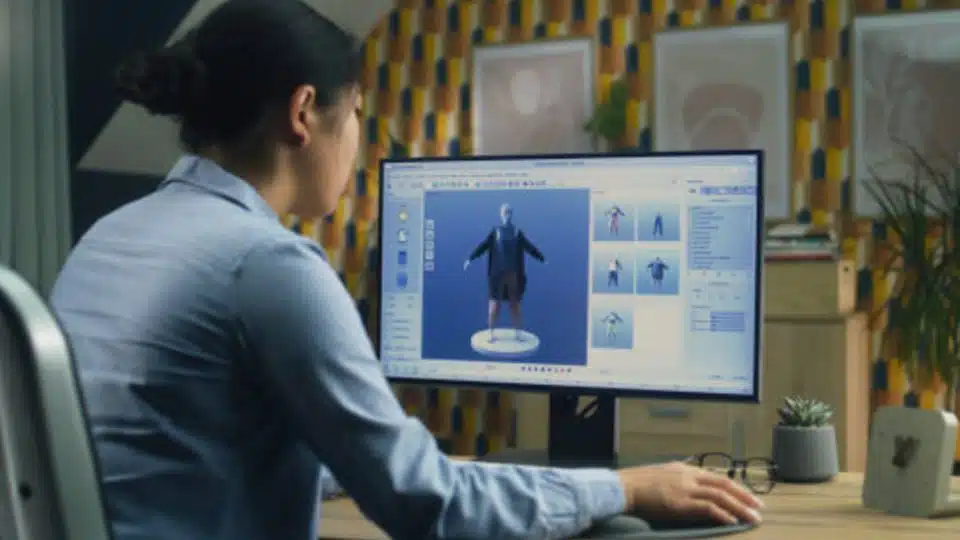
Artificial Intelligence (AI) has quietly transformed the way people work for many years. From chatbots and fraud detection to noise cancellation and predictive analytics, AI has improved countless digital systems, particularly on the backend of technology. Today, AI has moved to the forefront of innovation and productivity. With the integration of advanced AI tools into everyday software, product design processes are being fundamentally reshaped.
Modern tools integrated into platforms such as allow designers and engineers to generate ideas, analyze data, and create prototypes faster than ever before. These technologies make it possible to accomplish tasks that once required hours or days in just minutes. As a result, professionals can focus less on repetitive work and more on creative problem solving, innovation, and strategic thinking.
Despite concerns that AI might replace human workers, the reality is quite different. AI does not replace people; instead, it replaces repetitive tasks. This shift allows designers, engineers, and creative teams to spend more time on the aspects of work that require human judgment, creativity, and empathy.
Key areas for AI creative application are product design and lifecycle management.
The Role of AI in Modern Product Design

AI is transforming product design by accelerating the process from idea to prototype. Traditionally, product development required long cycles of research, conceptual design, prototyping, testing, and refinement. AI significantly reduces the time required at each stage.
One of the most important benefits of AI in design is its ability to rapidly generate and analyze large amounts of data. Designers can use AI-powered tools to analyze user behavior, market trends, and performance data to guide decision-making. This allows teams to create more user-centered products that better match consumer needs and preferences.
AI also enhances collaboration within design teams. Instead of spending hours drafting documents, presentations, or concept sketches, designers can use AI tools to quickly generate initial drafts and visualizations. This allows teams to focus on refining ideas, evaluating concepts, and discussing strategic decisions rather than assembling materials.
Furthermore, AI-powered generative design tools can produce multiple design alternatives based on a set of parameters such as cost, material constraints, performance requirements, and aesthetic preferences. Designers can then evaluate these options and refine them into viable, manufacturable products.
AI Technologies Supporting Product Design

Several forms of artificial intelligence contribute to modern design processes. One of the most common forms is Narrow AI, which focuses on performing specific tasks efficiently. Examples include tools such as ChatGPT and other large language models that assist with communication, documentation, and idea generation.
Machine Learning (ML) is another critical technology used in product design. ML systems analyze past data to identify patterns and make predictions. Designers can use this technology to predict how a product might perform under certain conditions or how consumers might respond to specific design features.
A more advanced form of ML is Deep Learning, which uses artificial neural networks to analyze large datasets. Deep learning is particularly useful for tasks such as image recognition, speech recognition, and natural language processing. These capabilities enable AI systems to interpret complex information and generate meaningful insights.
AI can also integrate with established design tools such as Computer-Aided Design (CAD) and Computer-Aided Engineering (CAE) software. Through this integration, AI can analyze simulation results, identify design flaws, and suggest improvements. This allows engineers to optimize designs much faster than traditional methods.
The Use Of AI In Product Design Offers Several Major Advantages

Increased Efficiency and Speed
AI can analyze massive datasets and generate design variations quickly, significantly accelerating the product development process. Tasks that once required weeks of experimentation and testing can now be completed in a fraction of the time.
Improved Design Quality
AI tools can detect design flaws and suggest improvements based on predictive modeling and simulation. This leads to higher-quality products that perform better and meet user expectations more effectively.
Reduced Costs
By shortening development cycles and minimizing design errors, AI can reduce research and development costs. Companies can bring products to market faster while using fewer resources.
Enhanced Creativity
Generative AI tools allow designers to explore a wide range of design possibilities. Instead of relying solely on human imagination, designers can use AI-generated concepts as inspiration and refine them into innovative solutions.
Beyond Product Design-
AI Across The Product Development Life Cycle

AI can support product development at several main stages, namely:
Market and User Research
AI tools can analyze large datasets containing consumer insights, market research, and competitor information. This helps designers identify new product opportunities and better understand user needs.
Concept Development
Generative AI tools can create visual design concepts based on prompts provided by designers. These tools help designers explore new ideas quickly and visualize potential product concepts.
Testing and Refinement
AI-powered simulation tools allow engineers to test product designs under various conditions. These tools can analyze structural performance, optimize materials, and improve manufacturability before physical prototypes are produced.
Challenges and Considerations

Although AI offers many benefits, organizations must also address several challenges when integrating it into product design.
Data Security
Companies must ensure that sensitive information used in AI tools remains protected. Many organizations are developing internal AI systems to safeguard proprietary data.
Intellectual Property Concerns
AI-generated designs may sometimes resemble existing products or copyrighted material. Businesses must implement policies to ensure that designs respect intellectual property laws.
Reliability and Accuracy
AI systems can occasionally produce incorrect or misleading outputs, sometimes referred to as “hallucinations.” Human designers must review and validate AI-generated results to ensure accuracy.
Ethical Considerations
The growing use of AI raises ethical questions regarding automation, bias, and transparency. Organizations must implement responsible AI practices to ensure fairness and accountability.
Conclusion
Artificial Intelligence is transforming product design by accelerating workflows, improving decision-making, and expanding creative possibilities. By integrating AI tools into research, concept development, and testing processes, organizations can design better products faster and more efficiently.
However, AI is not a replacement for human creativity or expertise. Instead, it is a powerful tool that complements the skills of designers and engineers. The most successful organizations will be those that combine AI capabilities with human insight and strategic thinking. Designers play a critical role in evaluating AI-generated concepts, selecting the most promising ideas, and refining them into viable products. They also bring empathy, creativity, and contextual understanding that AI cannot replicate.
In many ways, the role of designers is evolving rather than disappearing. Designers are becoming curators of creativity, using AI-generated insights and concepts as tools to support their decision-making.
As AI technology continues to evolve, it will play an increasingly important role in shaping how products are imagined, developed, and brought to market. When used thoughtfully and responsibly, AI has the potential to unlock new levels of innovation and transform the future of product design.
Find out more about Artificial Intelligence and its applications in retail and how Columbus Consulting can help you: https://www.columbusconsulting.com/generative-ai-at-a-glance/
This article is part of Columbus Consulting’s thought leadership series, This feature on DESIGN TOMORROW explores how businesses can grow with purposeful innovations. As leaders in the retail industry, Columbus Consulting champions bold, future-focused ideas. Each editorial piece is designed to provoke action and equip decision-makers to shape what’s next—consciously, creatively, and credibly.