
Why It Happens, Where It Hides, and How to Design It Out
By Henry Sands, Associate Partner Columbus Consulting

AI bias occurs when artificial intelligence systems produce unfair or prejudiced outcomes due to issues with the data, algorithms, or objectives they’re trained on.
AI bias in retail begins in the business: unclear decisions, inconsistent signals, timing gaps, and workflows built around human judgment that were never written down. When AI enters that environment, it learns the hidden patterns and turns them into automated behavior.
The key to reducing bias is to fix the operating model first. Make the decision explicit (what “good” looks like and the tradeoffs), stabilize the signals (consistent, timely data instead of competing truths), install guardrails before autonomy (so bad patterns can’t scale), and test everything inside a digital twin using your real history before anything touches production.
When addressing AI bias, start with one workflow — allocation, pricing, fulfillment — map where bias enters, stabilize the signals, add guardrails, and test the new logic in the twin. Expand only when the system is consistent and trust is earned.
The result: safer, fairer AI decisions aligned with how your retail business actually works.
While retailers are aware of AI bias and how it can impact the business over time, few know where to find it and, as importantly, how to design it out of the decision process. Most conversations about AI bias jump straight to the model: the training data, the math, the algorithm. But in retail, bias usually starts long before the model ever runs.
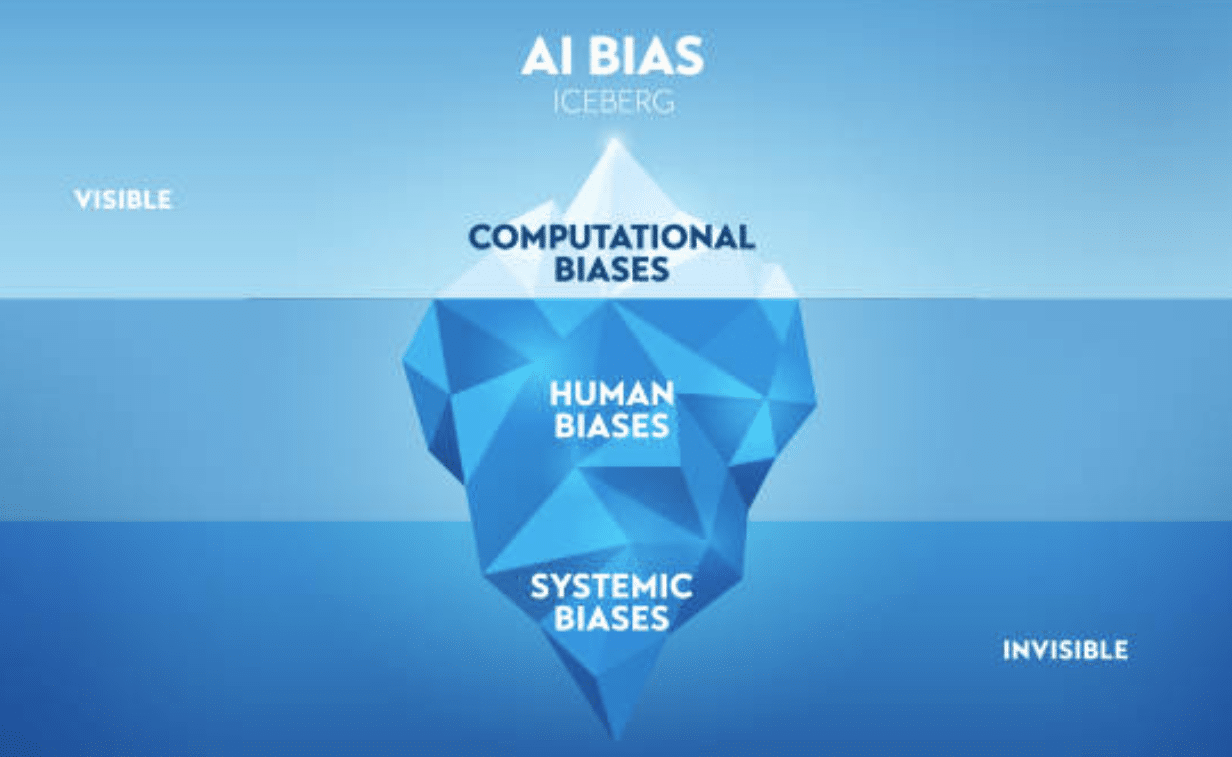
When assessing your organization’s AI bias, start with the following questions:

WHAT CAUSES AI BIAS?
AI bias in retail starts when:
- the decision logic is tribal
- the rules aren’t explicit
- the guardrails aren’t defined
- the workflow assumes a human will “just know” what to do
AI doesn’t invent bias. It exposes the bias already living inside the operating model. If the business hasn’t aligned on what “good” looks like, the model will make its own assumptions — and that’s where bias enters.
WHAT ARE THE COMMON AI BIAS TRAPS?
Retail-only traps are missed in classic machine learning. Some of the key traps are:
- prepack and fringe sizes
- shifting body size trends
- inbound receipt lag
- forecast overrides
WHAT ARE THE THREE MAIN AREAS THAT AI BIAS SHOWS UP IN RETAIL?
1. Decision Bias
Decision bias comes from unwritten preferences and historical instincts that never make it into the system. When preferences aren’t documented, AI learns them as truth.
Example: When Planners Override the System Because the Buys “Look Too Big”
A retailer was implementing a replenishment system with VMI. The system forecasted strong upside for 18-size programs — Oxfords, dress shirts, bottoms. The logic was sound. The demand signals were clear. But planners didn’t trust it. The buys looked “too big,” so they cut them — not because the math was wrong, but because the decision logic lived in their heads. If AI had been in the loop, it would have learned their discomfort as a rule.
2. Data Bias
Retail data drifts because systems don’t live in the same reality. Timing gaps, missing transactions, inconsistent attributes, and manual overrides all create skewed signals. AI reads those signals as intentional patterns. The model isn’t biased — the signals are.
Example: When Every System Has Its Own “Truth”
The rise of OMS and RFID (2016–2024) created a new kind of inventory fragmentation with disparate views. Retail disciplines in a single organization had separate and unique views on the same data. ERP, WMS, OMS, BOPIS, RFID, allocation and planning all had unaligned versions of inventory truth. And each defended their truth and relied on different systems/platforms to validate their views. For instance, the DC trusted physical counts, ERP trusted the ledger, and store trusted RFID counts. Everyone was right — and wrong — at the same time.
3. Operating Model Bias
Operating model bias is the bias no one sees — the invisible parts of the workflow that depend on human improvisation.
Humans can navigate this. AI can’t.
Example: When Shared Inventory Wasn’t Really Shared
From 2014 to 2020, retailers shifted from siloed to common inventory. On paper, it made perfect sense. But DTC, Stores, and Wholesale each had their own KPIs and compensation structures. So even though the company talked about “shared inventory,” the behaviors didn’t change. Teams protected their units. A-stores always got fed. C-stores were starved “just in case.” Frequent stockouts reinforced the belief that C-stores had no demand. The system never learned the true potential of those stores because the inventory never gave them a chance.
WHY DOESN’T TRADITIONAL BIAS MITIGATION WORK?
Retailers often try to fix bias by:
- cleaning the data
- tuning the model
- adding more rules
- running more tests
These help — but they don’t solve the root issue.
You can’t eliminate bias if the business hasn’t defined:
- the decision
- the acceptable tradeoffs
- the escalation paths
- the refusal conditions
- the guardrails
- the boundaries for autonomy
Bias disappears when decisions are explicit — not when data is perfect.
HOW CAN YOU DESIGN THE BIAS OUT OF THE BUSINESS MODEL?
-Make the Decisions Explicit
Define:
- what the decision is
- what inputs matter
- what “good” looks like
- what tradeoffs are acceptable
- when the model should escalate
-Stabilize the Signals
You don’t need perfect data. You need consistent data. Focus on:
- timing gaps
- missing transactions
- attribute drift
- manual overrides
-Build Guardrails Before Autonomy
Guardrails turn local instincts into enforceable operating rules — so bias can’t scale faster than oversight.
-Test Inside a Digital Twin
A digital twin is a safe simulation of your real history. You compare current vs. proposed rules, watch where guardrails trigger, and measure lift and risk — without touching production.
-Expand Only When the System Is Consistent
Bias reduction is a progression:
- clarity
- consistency
- trust
- autonomy
AI doesn’t create bias. It reveals it.

When retailers make decisions explicitly, stabilize the signals, and design workflows that agents can run with confidence, bias becomes manageable — not mysterious.
The future of AI in retail isn’t about eliminating bias entirely. It’s about building systems where bias can be seen, understood, and corrected before it reaches the customer.
